Shell Architecture & Centralised SSO
Iran Fava Gostaresh · IKCO Group
The architectural layer underneath the group’s platforms: a host shell that owns authentication, routing and shared chrome, so independent business services share one session without any of them handling credentials.
Overview
Several business services — vehicle sales, digital contracts, signing, account management — needed to feel like one product to the user while staying separate products to the teams building them. The shell is the layer that makes that true: it owns the session, the navigation chrome and the routing, and it hands each service a scoped token rather than a credential.
The problem
The default outcome when several teams build "one" app is either a monolith that nobody can deploy without coordinating, or a set of separate apps that each ask the user to log in again. Neither is acceptable when the journey crosses services mid-purchase. The genuinely hard part is token handling: every service needs authenticated access, no service should be able to leak a credential, and a token refresh happening in one service must not log the user out of another.
Approach
- Centralised the session in the shell. Business services never see credentials — they receive a scoped, short-lived token and ask the shell when they need a fresh one.
- Made token refresh a single-flight operation at the shell level, so concurrent expiry across services produces one refresh rather than a stampede.
- Gave each service its own route namespace and its own deployment, with the shell resolving which service owns a URL.
- Kept shared chrome — header, navigation, session state, error boundaries — in the shell so services cannot drift visually or handle auth errors inconsistently.
- Defined the shell/service contract explicitly, so a new business service integrates against a documented interface instead of reading another service’s source.
What shipped
- One session across every business service in the group.
- Independent deployment per service — no coordinated release train.
- Single-flight token refresh shared across services.
- A documented integration contract for onboarding new services.
Outcome
Teams ship on their own schedule while the user experiences a single signed-in product. Onboarding a new business service is an integration against a known contract rather than a merge into a monolith.
More work
 Enterprise
Enterprise Super App — Sale Service
Iran Fava Gostaresh
High-traffic vehicle sales app covering direct-sale, lottery and flash-sale workflows, shipped as an installable PWA — rebuilt around measurement, cutting the first visit by 69% and taking Lighthouse accessibility to 100.
- React
- Vite
- Zustand
- SCSS
- +6
- Enterprise
Global Corporate CMS
Iran Fava Gostaresh
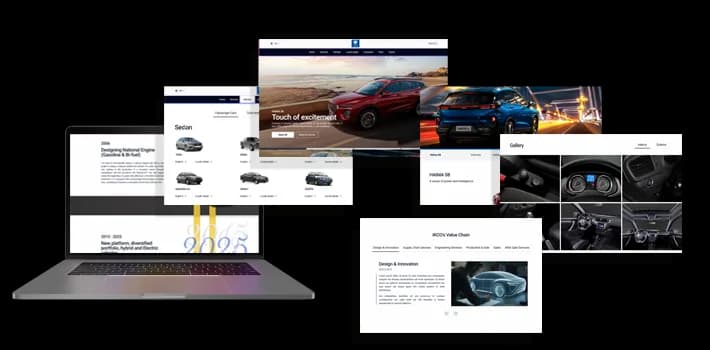
A modular content platform with 14 administrative modules — page builder, component builder, file manager, navigation management and role-based access control — that lets non-technical teams run corporate sites without a deployment.
- React
- TypeScript
- Zustand
- REST APIs
- +3